AI-Powered Web Scraping: Replacing Brittle CSS Selectors with LLMs
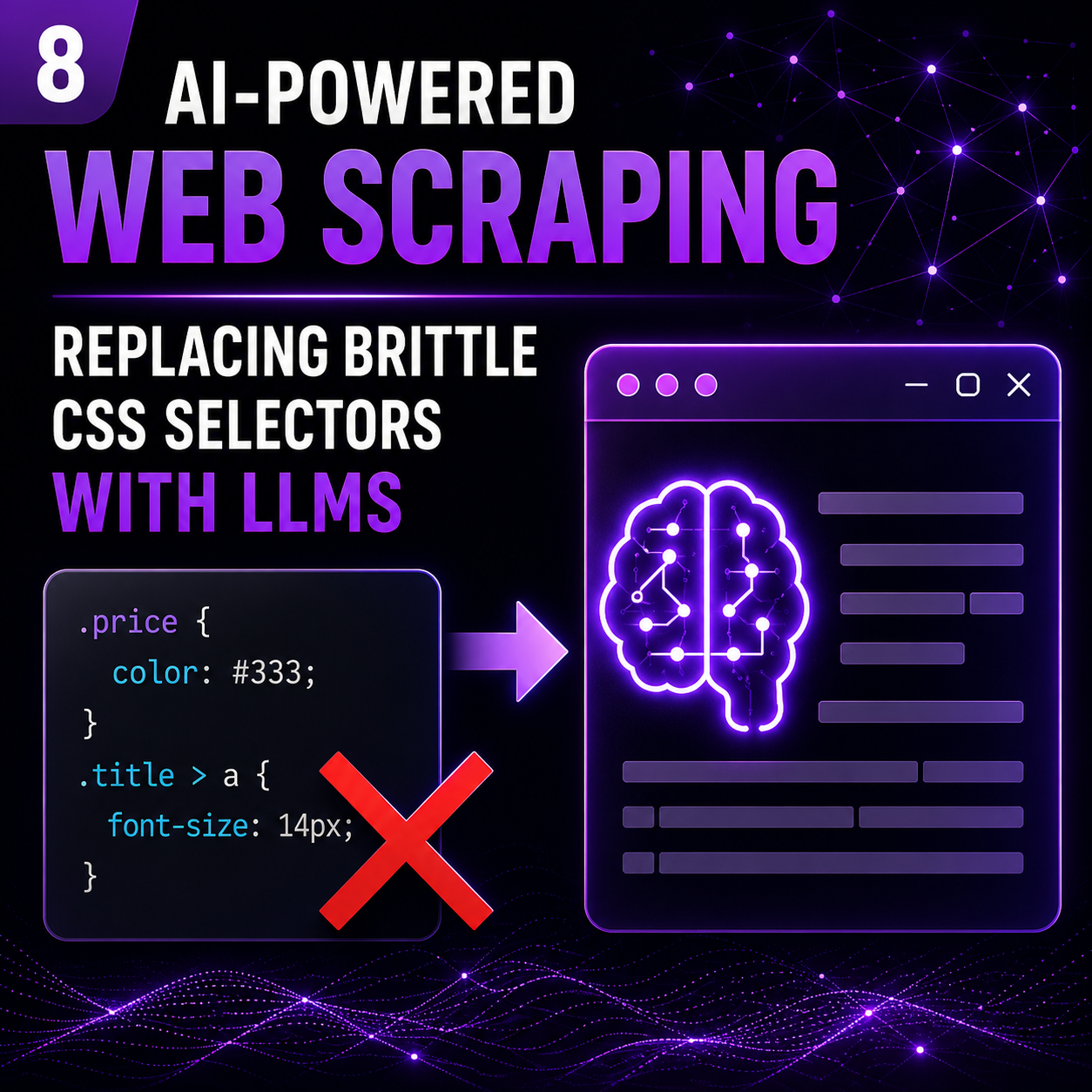
Traditional scrapers break whenever a website updates its HTML classes or layout structure. By combining headless browser tools (like Playwright) with small LLMs, web scraping has become **resilient, adaptive, and self-healing**.
1. Traditional vs. AI-Driven Scraping
Instead of hardcoding selector strings like div.product-card > span.price-tag, an AI scraper strips non-essential tags, passes markdown-formatted HTML to a fast vision-language model, and extracts structured JSON regardless of layout changes.
2. Modern Implementation Example
Below is a typical extraction flow using headless Playwright to fetch cleaner DOM markup and routing it to an LLM for structured JSON parsing:
from playwright.sync_api import sync_playwright
import json

def fetch_clean_markdown(url):
    with sync_playwright() as p:
        browser = p.chromium.launch(headless=True)
        page = browser.new_page()
        page.goto(url, wait_until="networkidle")

        # Extract inner text / main content container
        content = page.locator("main").inner_text()
        browser.close()
        return content

# Pass extracted content directly into your extraction model
raw_text = fetch_clean_markdown("https://example.com/products")
print("Clean DOM Content Ready for LLM Processing")3. Key Tools in the AI Scraping Stack
• Crawl4AI: Open-source framework optimized for LLM-friendly web extraction.
• Firecrawl: Turn entire websites into clean markdown for RAG pipelines.
• Playwright / Puppeteer: Headless browsers to handle dynamic JavaScript rendering.